01
Awareness, never a safety verdict
RipCo shows likely rips and conditions. It will never tell you a beach is “safe” or decide whether you should enter the water.
Technology can help you read the water. The people watching it in person always come first.
Six principles behind every screen. Shaped by interviews with Surf Life Saving NSW patrol members; an independent commitment, not an endorsement.
RipCo shows likely rips and conditions. It will never tell you a beach is “safe” or decide whether you should enter the water.
Use the app alongside your own judgement and the advice of lifesavers and lifeguards. The screen is only one part of the picture.
A gap in breaking waves can be a rip. A calm-looking surface is not a reason to assume the water is safe.
Detection can miss a rip or flag one that isn’t there. Confidence is a model reading, not a guarantee. Assume a rip could be present.
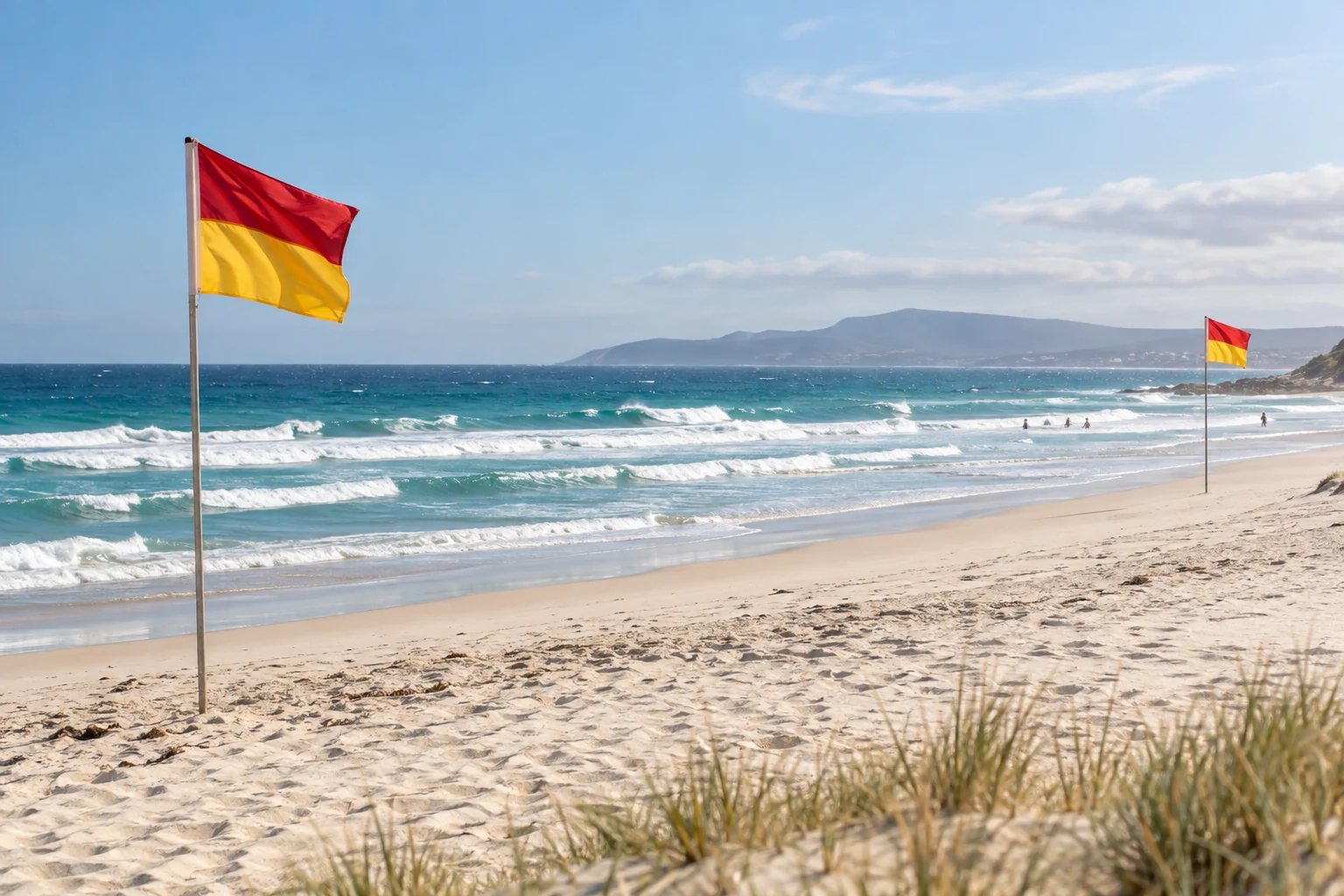
Red and yellow flags mark the patrolled swimming area. If there are no flags and no patrol, do not swim.
Follow the lifesavers and lifeguards on duty. Their advice and any beach closure override everything the app shows.
“Check the flags” lives under the beach information. When the patrol status isn’t known, the app says so.
The Live badge means the camera is streaming. It does not mean rip detection is available at that beach.
Explore the real app screen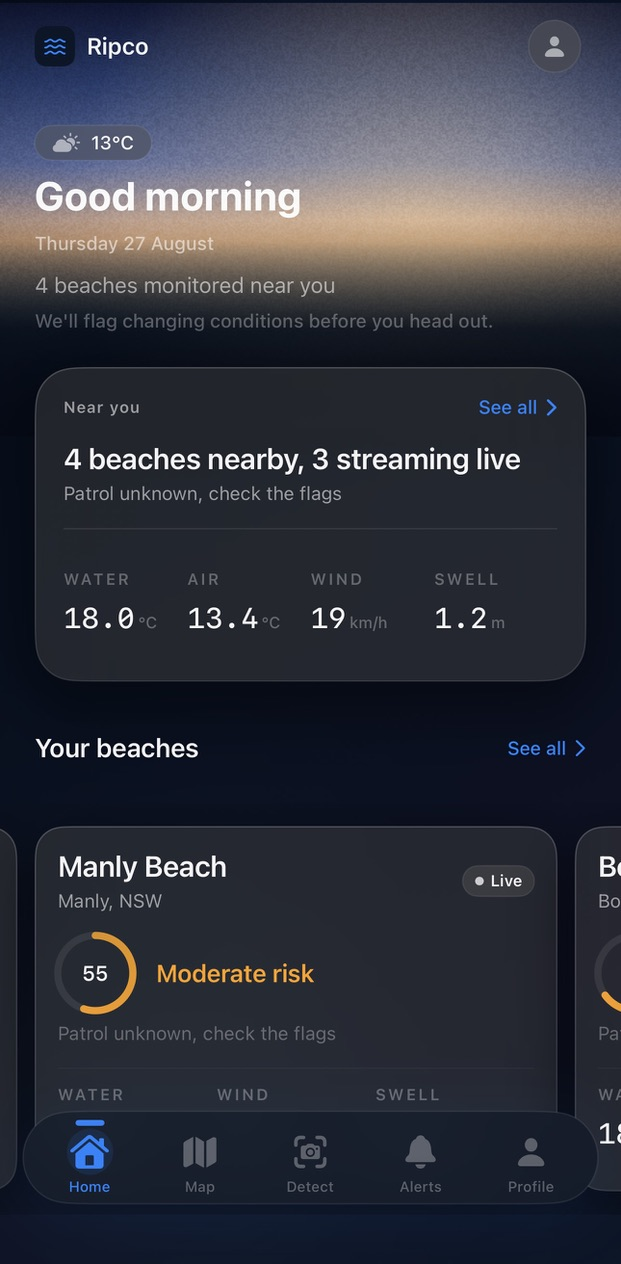
There is no single escape that works in every rip. These are options to consider, based on Surf Life Saving Australia’s guidance.
Conserve your energy. Floating with the current may bring you back to a shallow sandbank.
Raise an arm and call out to attract attention. Keep yourself afloat while waiting for help.
Avoid exhausting yourself by trying to swim directly against the rip.
If you can, swim parallel to shore or towards breaking waves. This may help you escape the current.
Who owns the camera? What can the assistant say? How reliable is a report? A safety tool should make its limits easy to find.
Detection runs on a public camera at Palm Beach that already streams to the web. The site and the app do not claim any relationship with its operator, and the footer says so. Reading a third party’s stream is the one arrangement that has to be settled before launch.
It answers questions about conditions and beach safety and is built to point you to the flags and the lifesavers. It is not designed to give a swim or don’t-swim verdict, and the answer to a question it cannot answer is to check with the patrol.
Sightings come from other beachgoers and are unverified. A report is a reason to look, not a fact. If lifesavers or lifeguards close the beach, their call overrides anything in the app.
The risk with any safety tool is that people stop looking at the water. Three design choices push against that: no safe state, a confidence figure on every outline so the model’s uncertainty is visible, and the flags line under each card.